
OSHA hand washing requirements for construction sites
Short answer
OSHA requires washing facilities near the work, with soap and water, whenever a construction crew handles paints, coatings, herbicides, insecticides or other harmful contaminants. The general lavatory rule applies to permanent workplaces, per OSHA's own interpretation. California requires one washing station per 20 workers on every site, and farms need one per 20 within a quarter-mile walk.
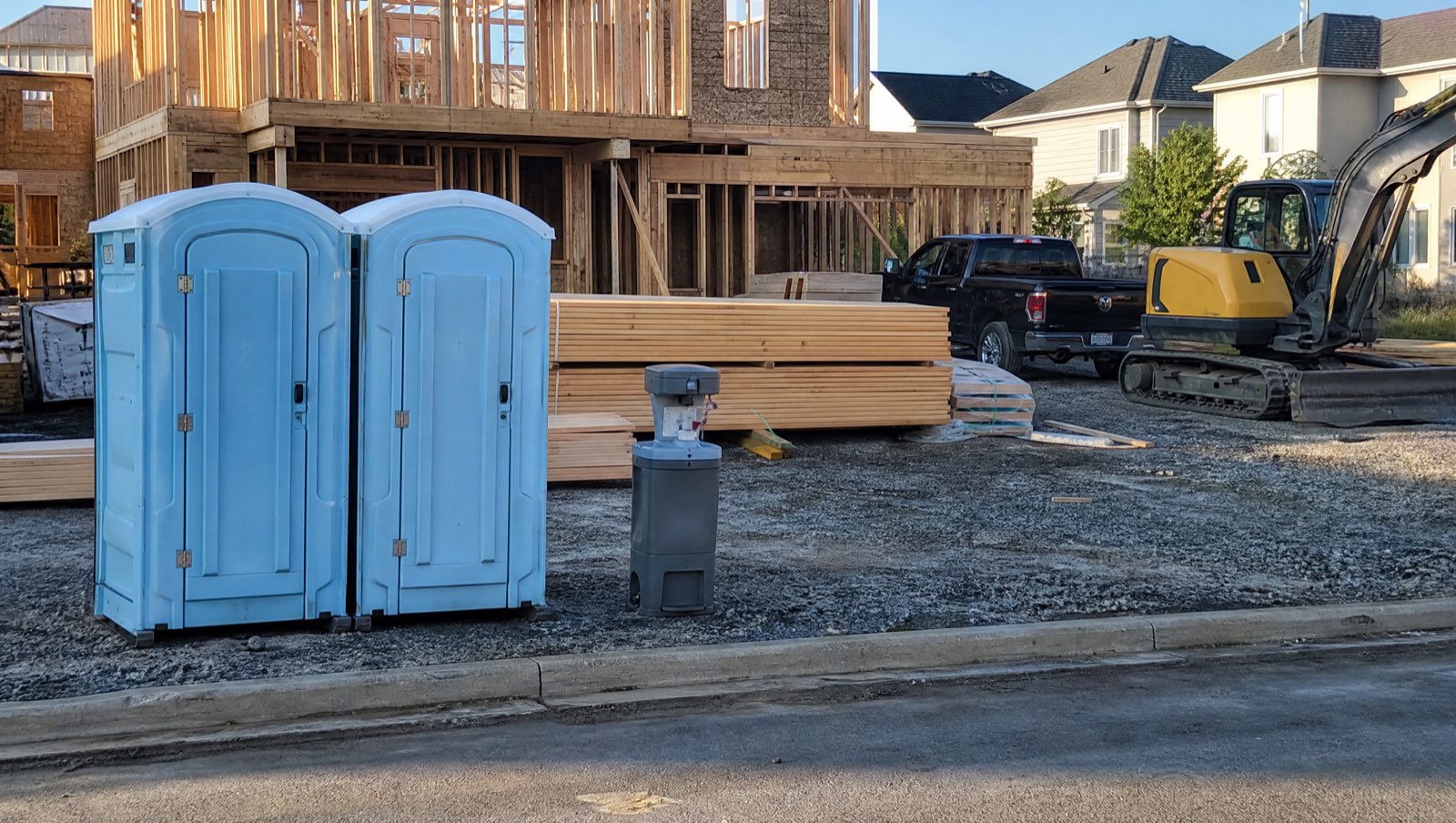
Most answers online quote one line of the rule and stop there. The full picture has three layers: a federal rule tied to what the crew handles, a narrower reading of the general lavatory rule, and state rules that go further. Here are all three, quoted from the source, with what they mean for a jobsite.
Which rule applies to your site
| Situation | Rule | What it requires |
|---|---|---|
| Crew handles paints, coatings, herbicides, insecticides or other harmful contaminants | 29 CFR 1926.51(f)(1) | Washing facilities near the worksite, equipped to remove the substance |
| Any construction site in California | Cal/OSHA Title 8 §1527 | 1 washing station per 20 workers, placed so every toilet user can wash |
| Permanent places of employment | 29 CFR 1926.51(f)(3) | Lavatories with hot and cold or tepid running water, soap and towels |
| Farm field work, 11 or more hand laborers | 29 CFR 1928.110 | 1 hand washing facility per 20 workers, within a quarter-mile walk |
| Mobile crews with transportation to nearby facilities | 1926.51(f)(3)(i), §1527 | Exempt from the lavatory and California station rules |
The contaminant rule: 1926.51(f)(1)
This is the paragraph that reaches ordinary jobsites. It reads: "The employer shall provide adequate washing facilities for employees engaged in the application of paints, coating, herbicides, or insecticides, or in other operations where contaminants may be harmful to the employees. Such facilities shall be in near proximity to the worksite and shall be so equipped as to enable employees to remove such substances" (1926.51(f)(1)).
Two things in it decide most cases. First, the trigger is the material, not the size of the site. In a 2006 letter about electrical work, OSHA applied the rule to corrosion preventatives, cutting oils and fire-stopping compounds, and pointed employers to the product's safety data sheet to decide whether it is harmful (OSHA letter, 2006). Second, "near proximity" has no number attached. The rule sets no distance in feet. In practice, crews put the station next to the toilets or close to the work area, not at the site office across the lot.
Is hand sanitizer or waterless cleaner enough?
Not where (f)(1) applies. In 2005 a union local asked OSHA whether rags and a can of waterless hand cleaner met the rule. OSHA's answer: "Typically, the employer's provision of waterless hand cleaner and towels/rags would not be sufficient to remove the harmful contaminants" (OSHA letter, 2005). The letter points to the rulemaking record: soap and water reduce several hazards at once, and potable water matters for flushing eye or skin injuries.
Sanitizer still has a place. On a site where no rule requires a station, a dispenser inside each unit is better than nothing. It is not a substitute for soap and water where the crew is handling contaminants.
The lavatory rule covers less than it reads
Paragraph 1926.51(f)(3)(i) says: "Lavatories shall be made available in all places of employment." Each lavatory needs hot and cold or tepid running water, hand soap, and individual towels or air blowers. Mobile crews and normally unattended locations are exempt if employees have transportation readily available to nearby washing facilities (1926.51(f)(3)).
Read alone, that sounds like every jobsite needs running water. OSHA has said otherwise. In a 1994 memorandum the agency stated that "paragraphs 1926.51(f)(2) through 1926.51(f)(4) only apply to permanent places of employment," and explained that the scope statement limiting them had been "inadvertently omitted" when the construction rule was published (OSHA memo, 1994). Paragraph (f)(1), the contaminant rule above, is not affected.
So federal OSHA does not require running-water lavatories on a typical temporary jobsite unless (f)(1) applies. That is the federal floor. A general contractor's safety plan, a project specification or a State Plan can require more, so check them before relying on the floor.
California: one washing station per 20 workers
Cal/OSHA's construction rule sets a number: "A minimum of one washing station shall be provided for each twenty employees or fraction thereof." Each station must be kept clean and sanitary, have an adequate supply of water for effective washing, soap or another suitable cleansing agent, and single-use towels or a warm-air blower. It must be "located and arranged so that any time a toilet is used, the user can readily wash." Mobile crews with readily available transportation to a nearby toilet and washing facility are exempt (Cal/OSHA §1527).
| Workers | Washing stations |
|---|---|
| 1-20 | 1 |
| 21-40 | 2 |
| 41-60 | 3 |
| 61-80 | 4 |
| 81-100 | 5 |
California is not the only state with its own plan. States that run OSHA-approved State Plans can set stricter rules (OSHA, State Plans), so check your state's sanitation rule if you work in one.
Farms follow a stricter federal rule
Agricultural field work falls under 29 CFR 1928.110, not the construction rule. When 11 or more employees do hand labor in the field, "one toilet facility and one handwashing facility shall be provided for each twenty (20) employees or fraction thereof." Both must be close to each other and within a one-quarter-mile walk of each worker's place of work, and hand washing facilities must be refilled with potable water as necessary and kept clean (OSHA, 29 CFR 1928.110, Field sanitation (agriculture)).
How many stations to order
| Setting | Minimum | Rule |
|---|---|---|
| Construction, federal | No ratio; at least one near contaminant work | 1926.51(f)(1) |
| Construction, California | 1 per 20 workers | Cal/OSHA §1527 |
| Farm field work | 1 per 20 workers | 1928.110 |
| Events | 1 per 10 toilet units | PSAI |
For a federal site with no numeric rule, the California ratio is a sensible benchmark: one station per 20 workers, next to the toilets. For events, PSAI's minimum is one station for up to 10 toilet units and one more for every 10 units after that (PSAI Guide, p. 8). The porta potty calculator adds stations to every result.
What a portable hand wash station is
A freestanding station has a fresh-water tank, a foot pump that runs the faucet, a soap dispenser, a towel dispenser and a tank for the used water. Some restroom units have a sink built in instead, and PSAI counts a hand wash station as at least one faucet (PSAI Guide). The station gets refilled and restocked on each service visit, so it follows the toilets' schedule: see how often porta potties are cleaned. In freezing weather the fresh-water tank needs a plan, covered in porta potties in winter.
Published 2026 pricing puts a hand wash station at $50 to $100 a month on top of the toilet rental (national price guide, listed under Sources). The local operator quotes the final price.
Common questions
Does OSHA require hand washing stations on construction sites?
When crews work with paints, coatings, herbicides, insecticides or other harmful contaminants, yes, under 29 CFR 1926.51(f)(1). The general lavatory rule applies to permanent places of employment, per OSHA's 1994 interpretation.
Is hand sanitizer OK instead of a hand wash station?
Not where 1926.51(f)(1) applies. OSHA's 2005 letter says waterless hand cleaner and rags typically are not sufficient to remove harmful contaminants.
How many hand wash stations per worker in California?
One per 20 workers or fraction of 20, under Cal/OSHA Title 8 §1527, placed so anyone using a toilet can readily wash.
How far can the hand wash station be from the work?
The construction rule says "near proximity to the worksite" and sets no distance. The farm rule, 1928.110, sets a one-quarter-mile walk.
How much does a hand wash station cost?
A 2026 national price guide lists $50 to $100 a month on top of the toilet rental. The local operator sets the final price.
Sources
- OSHA, 29 CFR 1926.51, Sanitation (construction)\2
- OSHA interpretation, February 10, 1994: 1926.51(f)(2)-(f)(4) apply to permanent places of employment\2
- OSHA interpretation, July 20, 2005: washing facilities on construction jobsites\2
- OSHA interpretation, June 12, 2006: washing facilities for electrical construction work\2
- Cal/OSHA, Title 8 §1527, Washing Facilities (construction)\2
- OSHA, 29 CFR 1928.110, Field sanitation (agriculture)\2
- OSHA, State Plans\2
- PSAI, Guide to Portable Restroom Excellence (2023)\2
- 2026 price guide published by a national rental marketplace (April 23, 2026)
General information, not legal advice. Porta Potty US connects callers with licensed, insured local operators; prices are quoted by the operator who delivers.
Keep reading
-
 Compliance
OSHA porta potty requirements for construction sites
OSHA 29 CFR 1926.51(c) requires toilets on construction jobsites: one facility for 20 or fewer workers, one toilet seat and one urinal per 40 workers above that, and one of each per 50 workers at 200 or more.
-
 Construction
Porta potty rental for construction sites
A construction site needs toilets from the first worker on site.
-
 Planning
How many porta potties do I need?
For a jobsite, plan one standard unit per 10 workers on a 40-hour week, serviced weekly: that is the ANSI/PSAI Z4.3 standard.