How many porta potties do I need?
Short answer
For a jobsite, plan one standard unit per 10 workers on a 40-hour week, serviced weekly: that is the ANSI/PSAI Z4.3 standard. OSHA's legal floor is lower. For an event, 1-50 guests for up to four hours need one unit and 100 guests need two. Add 10 to 20 percent when alcohol is served.
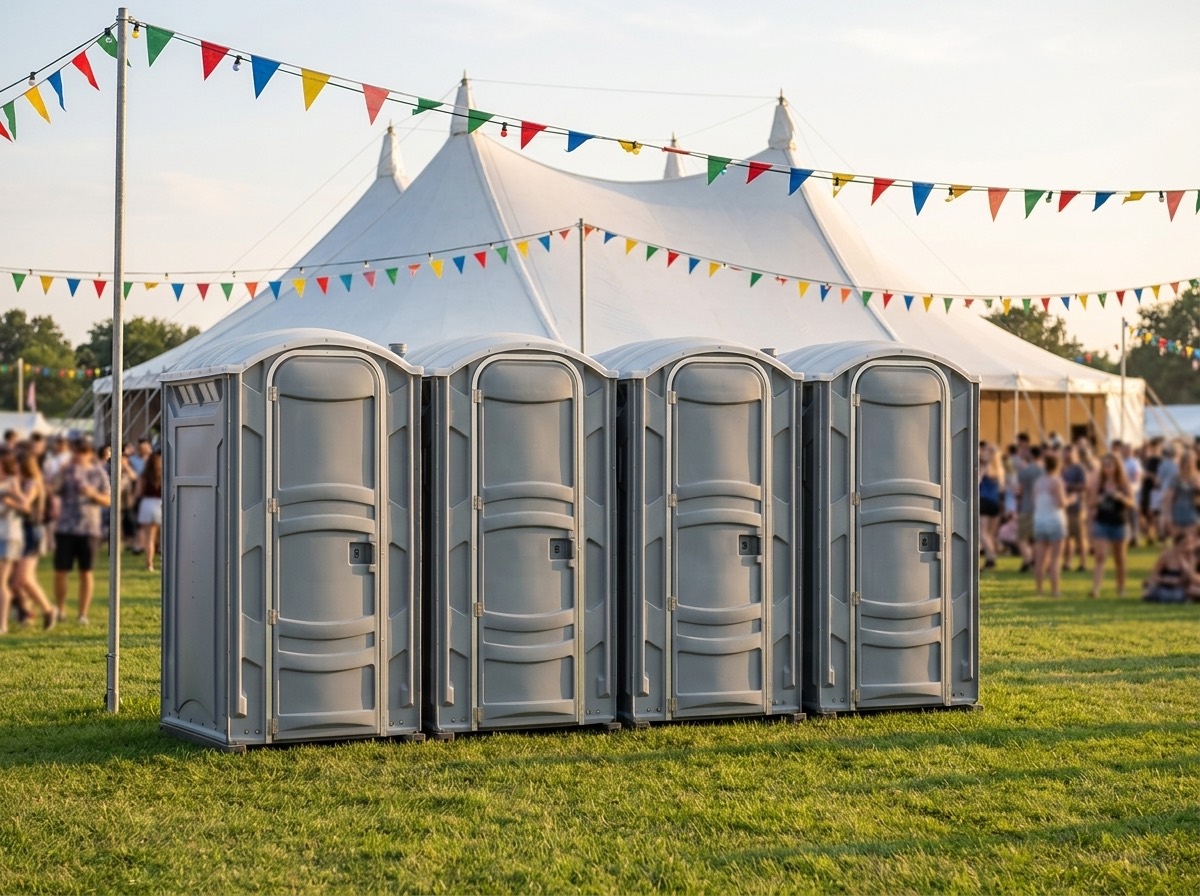
The count depends on two things: how many people use the units, and for how long. The portable sanitation industry publishes charts for both jobsites and events, and they are the same charts a dispatcher works from. Below are both, plus the factors that make a chart number too low. If you would rather not do the math, the porta potty calculator does it from your headcount.
Jobsites: one unit per 10 workers, per shift
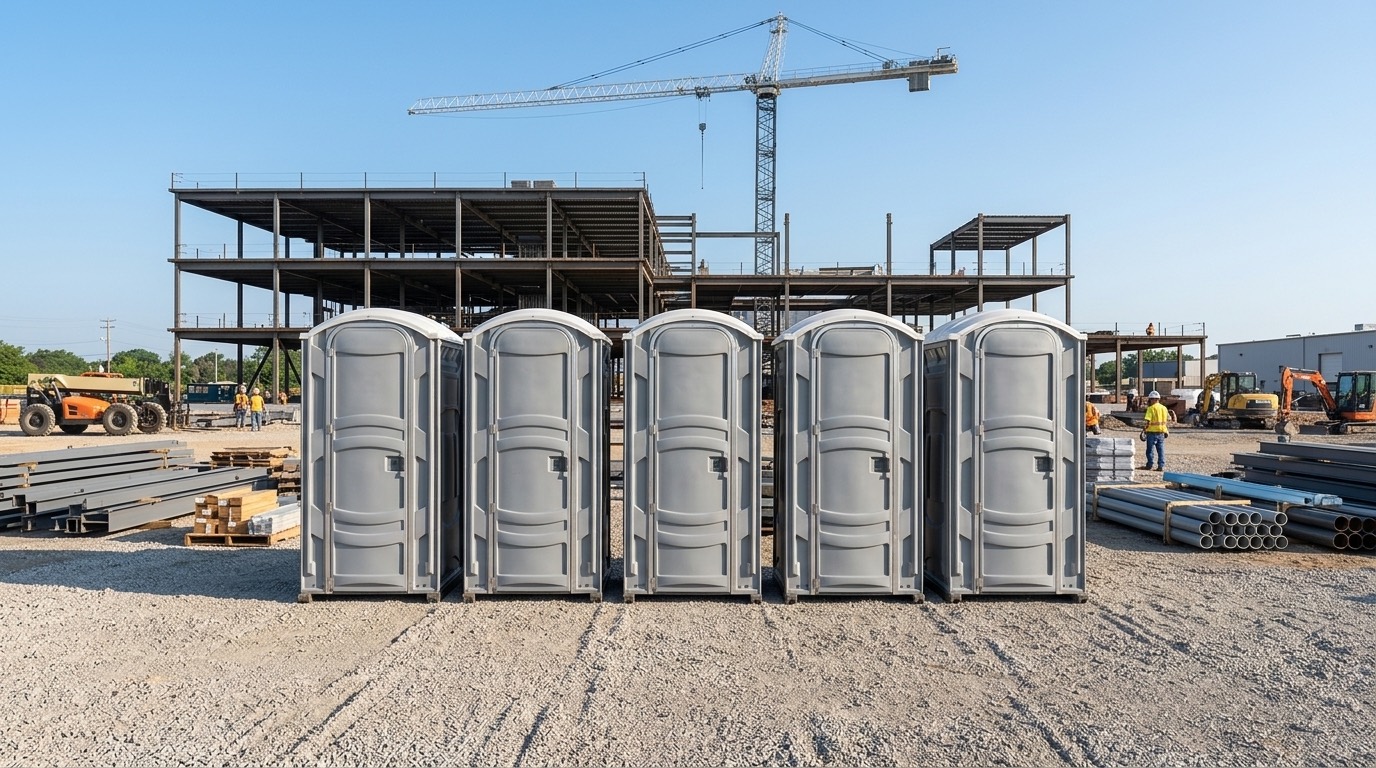
The industry standard for worksites is ANSI/PSAI Z4.3. It sizes one weekly-serviced unit for no more than 10 workers on a 40-hour week, and it scales by shift: a second 8-hour shift doubles the count, because the same units now take twice the traffic before the truck comes back (PSAI Guide, p. 9).
| Workers on site | Units, one shift | Units, two shifts |
|---|---|---|
| 1-10 | 1 | 2 |
| 11-20 | 2 | 4 |
| 21-30 | 3 | 6 |
| 31-40 | 4 | 8 |
| 41-50 | 5 | 10 |
| 51-60 | 6 | 12 |
| 60+ | 1 more unit per 10 workers, per shift | |
OSHA's own number is lower. The construction standard requires one facility for 20 or fewer workers, then one toilet seat and one urinal per 40 workers (29 CFR 1926.51(c)). That is the legal minimum, and it is the number an inspector checks. The Z4.3 number is the one that keeps the units usable until service day. The gap between the two is covered in our OSHA requirements guide.
Events: headcount times hours
For events, PSAI publishes a chart built on one assumption: under normal conditions a person uses the restroom about once every four hours. The chart gives the minimum number of units when no one pumps them during the event, for an even mix of men and women (PSAI Guide, p. 8).
| Guests | 2 hours | 4 hours | 6 hours | 8 hours |
|---|---|---|---|---|
| 1-50 | 1 | 1 | 2 | 2 |
| 100 | 2 | 2 | 3 | 3 |
| 250 | 2 | 2 | 3 | 3 |
| 500 | 4 | 5 | 7 | 9 |
| 1,000 | 6 | 8 | 9 | 12 |
| 2,000 | 6 | 12 | 16 | 20 |
| 5,000 | 15 | 25 | 38 | 50 |
When your headcount falls between two rows, use the higher row. The chart goes up to 10,000 guests and 10 hours in the full version; past that, the event needs a service schedule, not just a count.
What makes the chart number too low
A chart is a floor. These are the conditions PSAI lists as reasons to go above it:
- Alcohol. Add 10 to 20 percent more units when alcohol is served.
- Heat, food and drink. Weather and consumption can raise restroom visits by 30 to 40 percent.
- Everyone at once. A concert intermission or a race start sends people in waves. A jobsite spreads use across the day. Waves need more units than the average suggests.
- People you forgot to count. Vendors, security, volunteers and crew use the units too.
- Long days. Events where people stay longer need more units.
If a line at the door is the thing your event cannot afford, round up.
ADA units and hand wash stations
For events that are public accommodations under the ADA, PSAI states that at least five percent of units must be ADA compliant, and the path to them must be accessible too. On a jobsite, add an ADA unit when anyone on site needs step-free access.
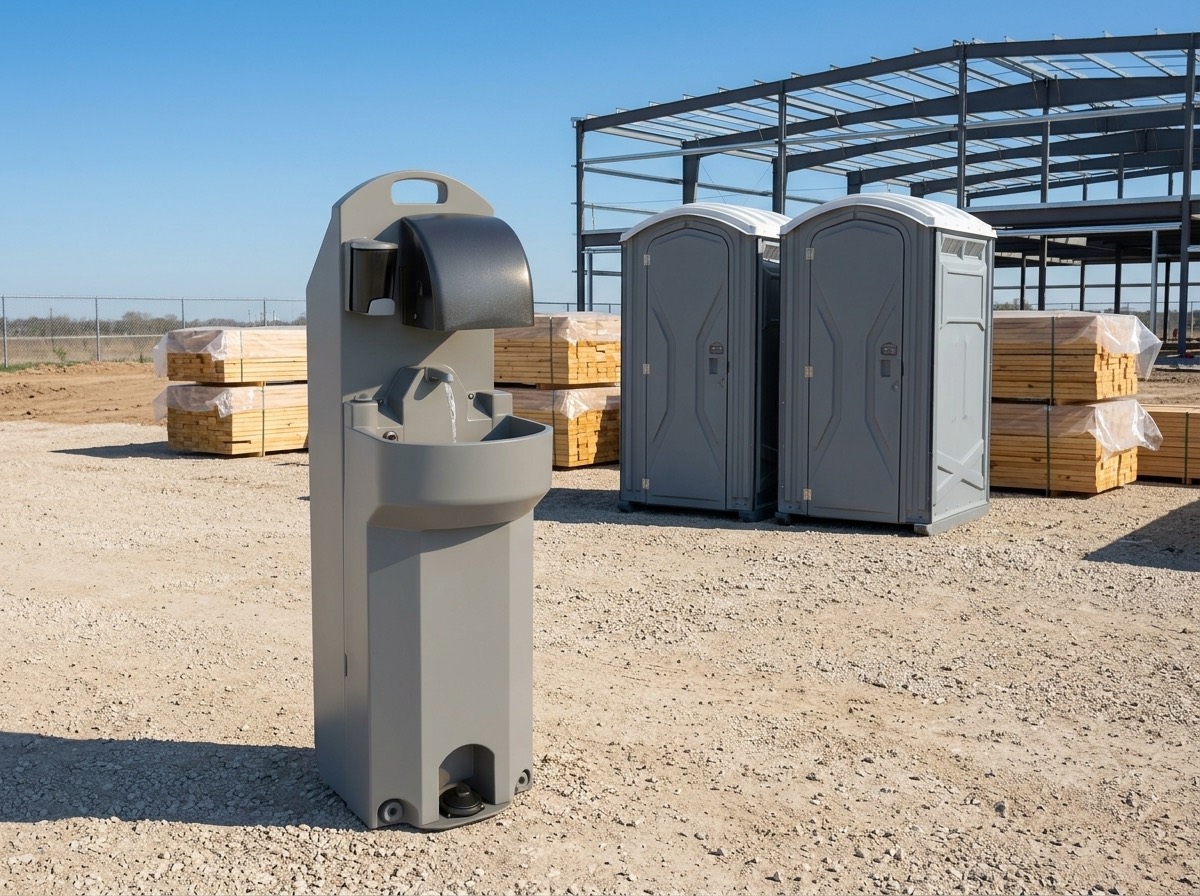
Hand washing scales with the toilet count. PSAI's minimum for events:
| Toilet units | Hand wash stations |
|---|---|
| 1-10 | 1 |
| 11-20 | 2 |
| 21-30 | 3 |
| 31-40 | 4 |
| Over 40 | 1 more per 10 units |
On construction sites the federal rule is narrower than most people think. OSHA requires washing facilities with soap and water where crews work with paints, coatings or other harmful contaminants (1926.51(f)(1)), and California requires one washing station per 20 workers on every site (Cal/OSHA §1527). Most general contractors put a hand wash station next to the toilets either way. Details in the hand washing requirements guide.
Fewer units or more service?
A unit's tank holds a finite number of uses, so the count and the service schedule trade off against each other. A two-day festival can run on fewer units if a truck pumps them overnight. A jobsite with 25 workers can run on two units serviced twice a week instead of three serviced once. Which one is cheaper depends on the local operator's pricing, and the dispatcher can quote both. How service works is in how often porta potties are cleaned.
Common questions
How many porta potties do I need for 100 guests?
Two units for an event of up to four hours, three for six to eight hours, by the PSAI chart. Add 10 to 20 percent if alcohol is served.
How many porta potties for 20 workers?
Two units on a single 8-hour shift under ANSI/PSAI Z4.3, serviced weekly. OSHA's legal minimum for 20 or fewer workers is one facility.
Does alcohol change the count?
Yes. PSAI recommends 10 to 20 percent more units when alcohol is served.
Do I need an ADA unit?
For a public event covered by the ADA, PSAI states at least five percent of units must be ADA compliant. On a private jobsite, add one when anyone on site needs step-free access.
How many hand wash stations do I need?
One for up to 10 toilet units, two for 11-20, and one more for every 10 units after that, per PSAI.
Sources
- PSAI, Guide to Portable Restroom Excellence (2023)\2
- OSHA, 29 CFR 1926.51, Sanitation (construction)\2
- Cal/OSHA, Title 8 §1527, Washing Facilities (construction)\2
General information, not legal advice. Porta Potty US connects callers with licensed, insured local operators; prices are quoted by the operator who delivers.
Keep reading
-
 Compliance
OSHA porta potty requirements for construction sites
OSHA 29 CFR 1926.51(c) requires toilets on construction jobsites: one facility for 20 or fewer workers, one toilet seat and one urinal per 40 workers above that, and one of each per 50 workers at 200 or more.
-
 Construction
Porta potty rental for construction sites
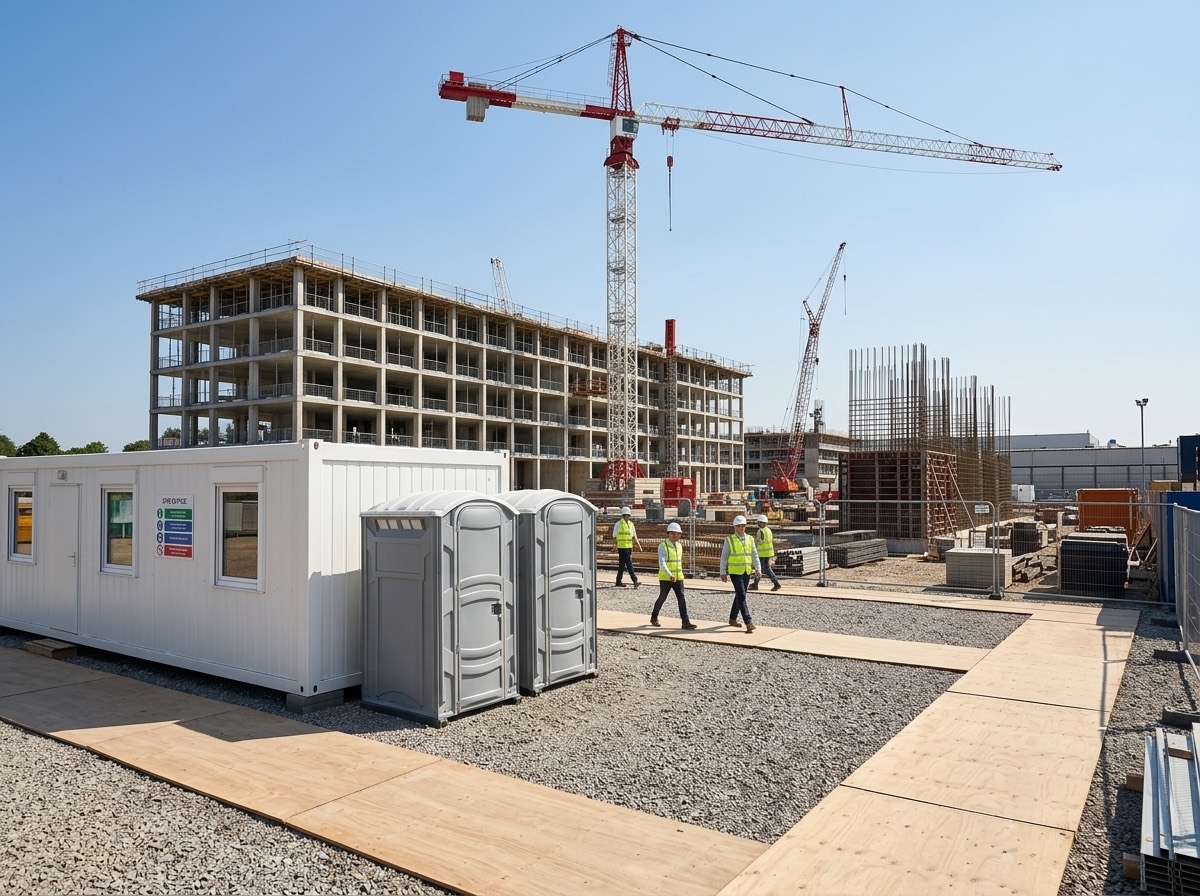
A construction site needs toilets from the first worker on site.
-
 Service
How often are porta potties cleaned?
The standard is once a week.
Porta potty rental near you